Die Fußreflexzonenkarte einfach erklärt
Vom Redaktionsteam von AUREZA TOUCH verfasst und auf Verständlichkeit geprüft.
Was ist eine Fußreflexzonenkarte?
Reflexzonen-Karten teilen die Fußsohle in Bereiche ein, die in der Tradition verschiedenen Körperregionen zugeordnet werden: die Zehen dem Kopf, der Fußballen dem Brustbereich, das Fußgewölbe dem Bauchraum und die Ferse dem unteren Rücken und Becken. Das heutige westliche Kartensystem wurde vor allem im frühen 20. Jahrhundert verbreitet.
Gibt es wissenschaftliche Belege für Reflexzonenmassage?
Die ehrliche Antwort: Die Verbindung einzelner Fußzonen mit bestimmten Organen ist kein anerkanntes anatomisches System. Fußmassage und Druck können sich entspannend anfühlen und vorübergehend das Komfortempfinden verändern, doch die Studienlage zu weitergehenden gesundheitlichen Wirkungen ist uneinheitlich. Reflexzonenmassage ersetzt keine medizinische Diagnose oder Behandlung.
Welche Hauptbereiche zeigt die Karte?
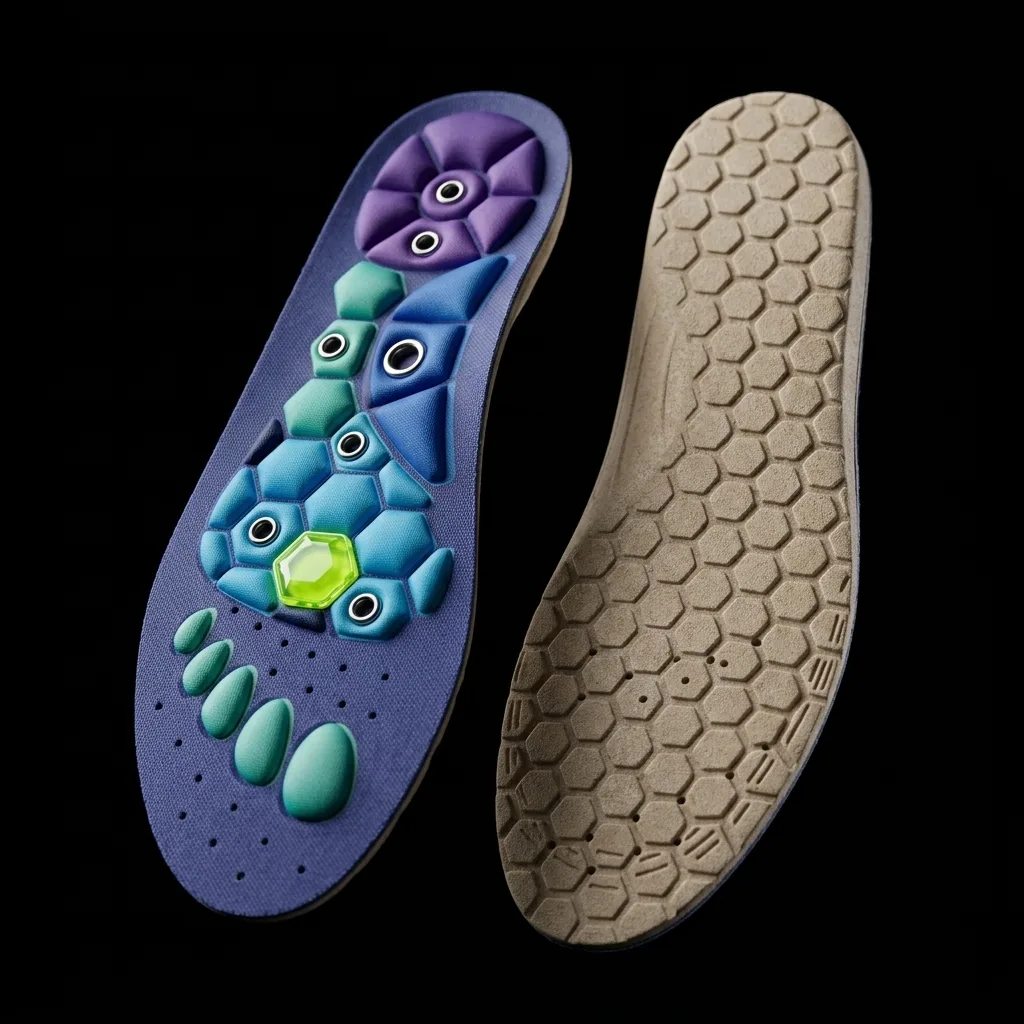
Häufig dargestellt werden Zehen und Zehenpolster, Fußballen, innere und äußere Fußkante, mittleres Fußgewölbe und Ferse. Die traditionelle Zuordnung variiert zwischen Schulen und Karten. Betrachte sie daher als Orientierung einer Massage-Tradition, nicht als medizinische Abbildung des Körpers.
Wie greifen Akupressur-Einlegesohlen die Karte auf?
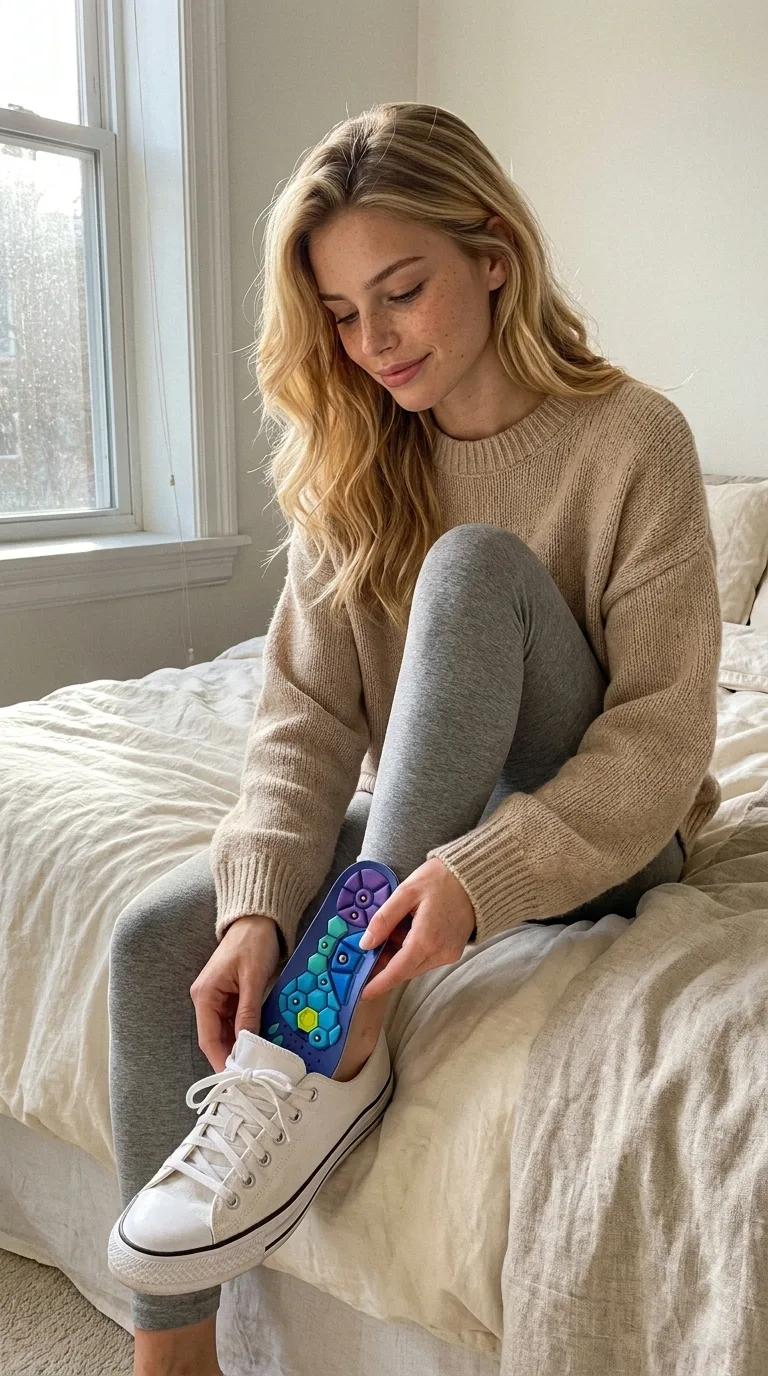
Strukturierte Einlegesohlen verteilen unterschiedlich große Massagepunkte über Ferse, Gewölbe und Vorfuß. Manche Anordnungen orientieren sich optisch an klassischen Reflexzonen-Karten. AUREZA Touch™ nutzt abgestufte Noppen für ein spürbares Massagegefühl beim Gehen. Das ist eine Komfortfunktion und bedeutet nicht, dass Organe beeinflusst oder Krankheiten behandelt werden.
Kann ich Reflexzonenmassage selbst ausprobieren?
Du kannst den Fuß einige Minuten mit den Daumen und angenehmem, kreisendem Druck von der Ferse zu den Zehen massieren. Der Druck sollte niemals schmerzhaft sein. Bei Verletzungen, offenen Stellen, starker Schwellung, Taubheit oder anhaltenden Beschwerden solltest du die Anwendung auslassen und fachlichen Rat einholen.
Was ist die wichtigste Erkenntnis?
Nutze die Karte als traditionelle Massagehilfe und bewerte das direkte Gefühl an deinen Füßen. Ein angenehmer Druck kann Teil einer Entspannungsroutine sein, ist aber kein Beweis für eine Wirkung auf innere Organe. Komfortprodukte wie strukturierte Einlegesohlen sind kein Medizinprodukt.
Nur allgemeine Informationen — keine medizinische Beratung. AUREZA TOUCH ist ein Komfortprodukt und kein Medizinprodukt. Bei anhaltenden, starken oder plötzlichen Schmerzen, Taubheit, Schwellung oder Verletzung fachlichen Rat einholen.
Veröffentlicht:
Zuletzt aktualisiert: