Les meilleures semelles pour marcher toute la journée : l’essentiel
Rédigé et relu pour sa clarté par l’équipe éditoriale AUREZA TOUCH.
Qu’est-ce qui rend une semelle adaptée à la marche toute la journée ?
Quatre éléments comptent particulièrement : l’ajustement, le maintien, l’amorti et le confort à chaque pas. La semelle doit correspondre précisément à la chaussure. La voûte plantaire doit être soutenue sans être poussée trop haut, tandis que le talon a besoin d’amorti sans réduire l’espace des orteils. Les semelles trop souples peuvent s’aplatir rapidement et perdre leur maintien.
Gel, mousse ou semelles massantes : que choisir ?
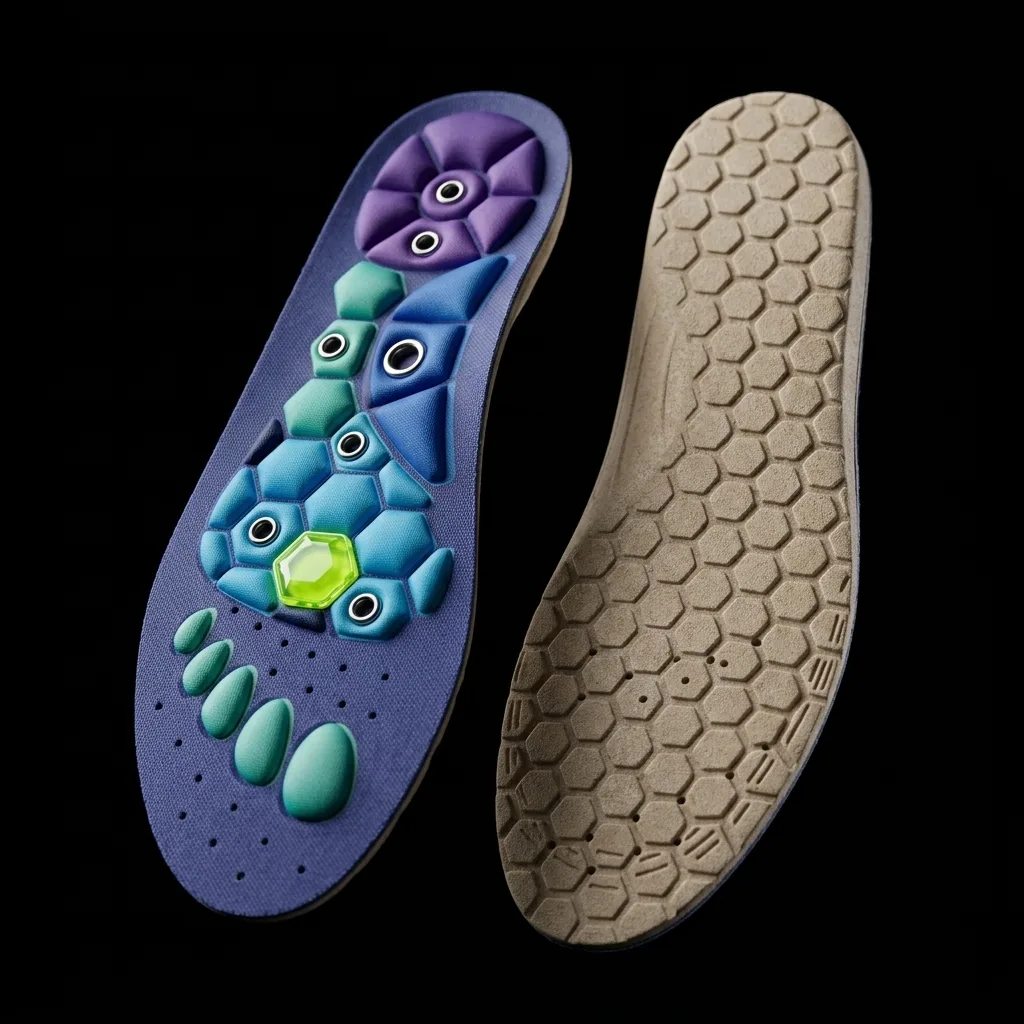
Le gel absorbe bien les chocs, mais offre souvent peu de structure lorsqu’il est utilisé seul. La mousse à mémoire de forme est agréable au début, mais peut perdre sa forme avec un usage quotidien. Les semelles massantes ou d’acupression ajoutent des stimulations perceptibles sous le pied. Pour de longues marches, une base ferme avec une surface structurée confortable est souvent plus pratique que la seule souplesse.
Pourquoi l’ajustement par découpe est-il important ?
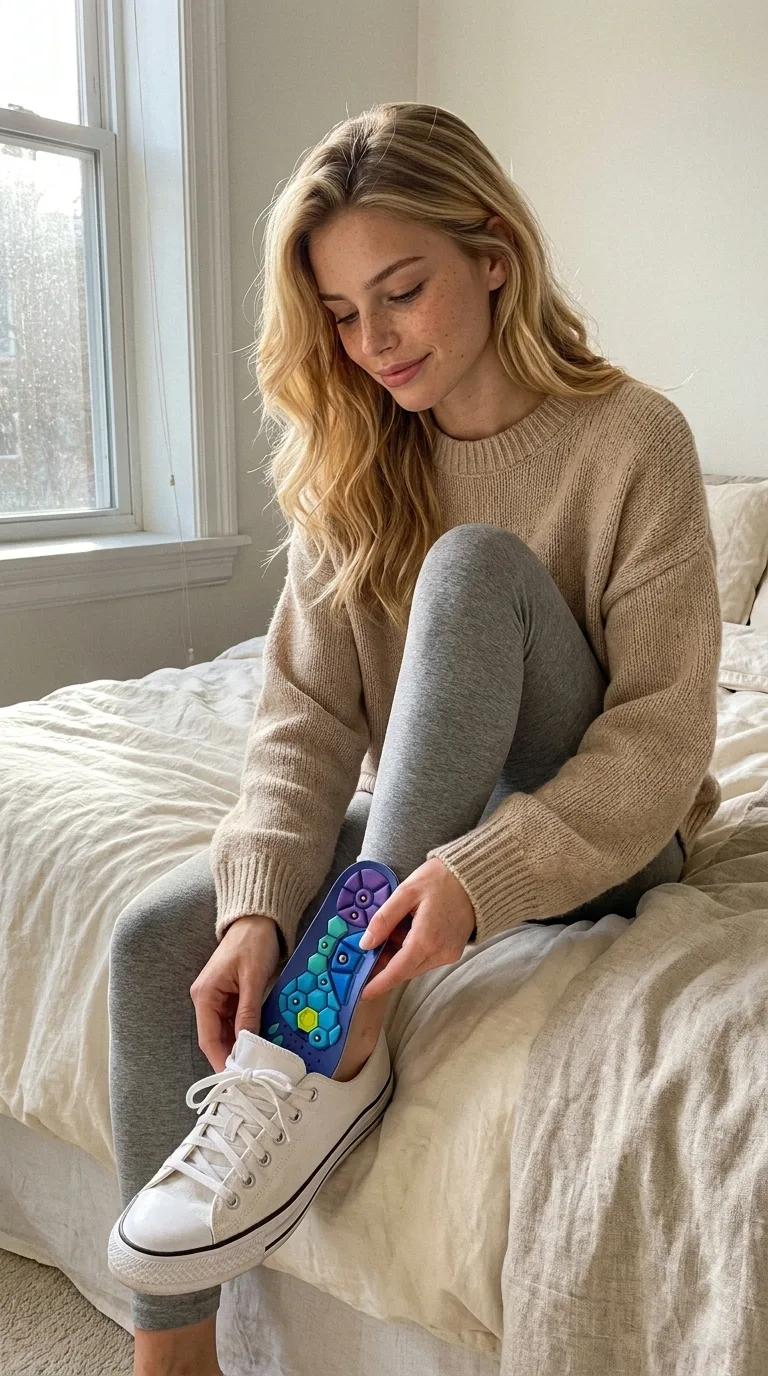
Il est essentiel. Une semelle qui glisse, se plisse ou remonte sur les côtés peut créer de nouveaux points de pression. Les modèles découpables comme AUREZA Touch™ comportent des lignes de taille pour vous guider. Utilisez la semelle d’origine amovible comme gabarit, découpez progressivement et vérifiez que le talon et les orteils disposent toujours d’assez d’espace.
Combien de paires faut-il ?
Si vous portez régulièrement plusieurs chaussures, disposer d’une paire dédiée dans chacune d’elles est plus pratique. Déplacer constamment la même paire prend du temps et augmente le risque d’oublier le changement les matins chargés. Vérifiez néanmoins l’ajustement dans chaque chaussure, car la forme et le volume intérieur peuvent varier.
Combien de temps durent les semelles ?
Cela dépend du matériau, de la fréquence d’utilisation, du poids, de l’humidité et de la distance parcourue. Vérifiez régulièrement les zones aplaties, les fissures, les odeurs et la perte de maintien. Remplacez les semelles lorsque le confort diminue nettement ou qu’elles ne conservent plus leur forme.
En résumé
Pour passer toute la journée à marcher, recherchez la bonne combinaison entre taille adaptée, maintien stable et amorti confortable. La souplesse seule ne remplace pas le maintien. Commencez par de courtes périodes et arrêtez en cas de douleur, d’engourdissement ou de points de pression marqués.
Informations générales uniquement — elles ne remplacent pas un avis médical. AUREZA TOUCH est un produit de confort, pas un dispositif médical. Consultez un professionnel en cas de douleur persistante, intense ou soudaine, d’engourdissement, de gonflement ou de blessure.
Publié:
Dernière mise à jour: