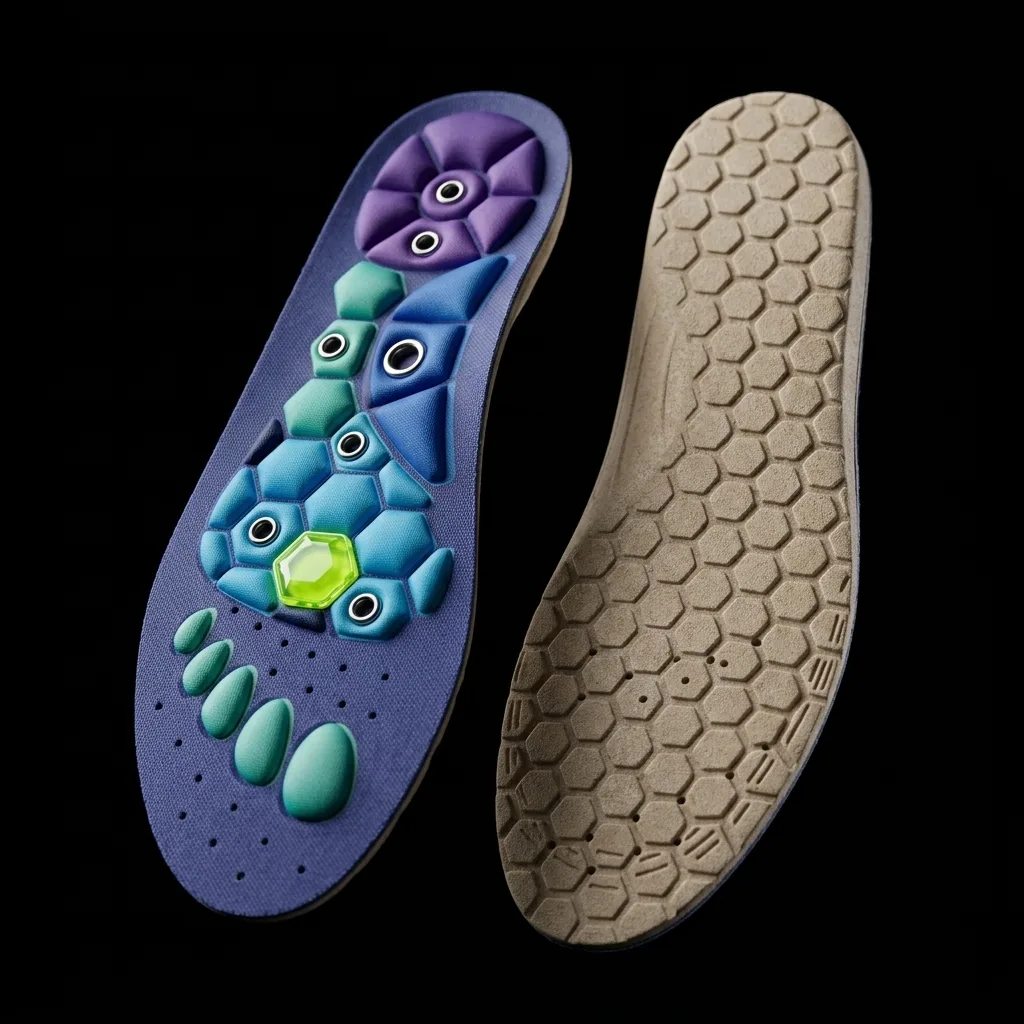
How Often Should You Replace Insoles? Check These Signs
Written and reviewed for clarity by the AUREZA TOUCH Editorial Team.
Is there one correct replacement schedule?
No single calendar applies to every insole. Prescribed orthoses, soft foam liners and everyday comfort insoles use different materials and face very different loads. Norfolk and Waveney Community Health and Care NHS Trust says its prescribed insoles may last about two years with normal use. Rotherham Doncaster and South Humber NHS gives roughly 18 months for many materials under moderate use and proper care.
Those figures are useful context, not a promise for every retail insole. Harvard Health notes that lower-cost over-the-counter orthotics may need to be replaced more often. A person who alternates several shoes may see slower wear than someone who uses one pair through long shifts, exercise and wet weather.
Treat time as a reminder to inspect, not as the only reason to replace.
Which physical wear signs matter most?
Start with shape. Place both insoles side by side on a flat surface. Look for one side that has become thinner, curled, cracked or permanently compressed. Pay close attention to the heel and forefoot, where repeated loading often becomes visible first.
Next, check the top cover and edges. Peeling fabric, a split layer or a front edge that folds under the toes can change fit even if the middle still looks acceptable. The insole should return to its intended shape after it has aired. If it stays twisted or forms a ridge, it may no longer sit predictably inside the shoe.
Also check movement. A correctly sized insole should lie flat rather than sliding, bunching or squeaking because its structure has distorted. Before replacing it, make sure the problem is not simply an incorrect trim or debris underneath.
Can comfort changes tell you it is time?
Sometimes the first sign is not visible. You may notice that a familiar shoe feels flatter, less stable or more tiring than before. That change is more meaningful when the shoe, socks and daily activity have stayed similar.
Do not assume every new ache comes from a worn insole. Shoes also lose cushioning, work routines change and feet can become irritated for many reasons. Compare the insole in another suitable shoe, or compare it with a fresh pair of the same model if possible.
Persistent, severe or sudden pain, numbness, marked swelling or an injury should be assessed by a qualified professional. Replacing an insole is not a substitute for finding the cause of a new symptom.
How do use and care affect lifespan?
Hours matter more than occasional calendar use. Daily standing, higher-impact activity, heat, moisture and using the same pair without time to dry can accelerate wear. Rotating between two pairs may give materials time to air and recover, while also making side-by-side comparison easier.
Care should follow the product instructions. In general, remove loose debris, air the insoles away from direct heat and avoid a washing machine or tumble dryer unless the maker specifically permits it. High heat can warp foam or loosen bonded layers.
Odour alone does not always mean an insole has failed. Airing and appropriate surface cleaning may help. But persistent odour together with delamination, permanent dampness or a changed shape is a reasonable replacement signal.
What should a weekly insole check include?
The Royal National Orthopaedic Hospital advises removing orthoses at least weekly to brush off debris and inspect them for wear. A simple home routine takes less than a minute: remove both insoles, let them air, compare left with right, press the main cushioning zones and inspect the underside.
Check the shoe at the same time. A damaged lining, rough seam or worn outsole can create discomfort that a new insole cannot correct. Put the insoles back only when both shoe and insole are dry and flat.
Write the start date discreetly under the heel if you tend to forget when a pair entered service. The date provides context, while the inspection decides.
When should you replace rather than keep testing?
Replace when the insole has a permanent structural change, no longer fits flat, creates pressure or sliding, or no longer delivers its intended everyday comfort after you have ruled out a placement problem. Replace both sides together unless a clinician has given different instructions; mismatched age and height can feel uneven.
If a prescribed orthosis is damaged or no longer comfortable, contact the service that supplied it rather than modifying it heavily yourself. Clinical devices follow different rules from general comfort products.
How does this apply to AUREZA TOUCH?
AUREZA TOUCH is a trim-to-fit everyday comfort insole, not a medical device. Inspect it regularly, keep it clean and dry according to its care instructions, and judge replacement by shape, fit and comfort as well as time. A fresh pair should sit flat and secure; a worn pair should not be kept simply because an anniversary has not arrived.
Sources checked
General information only — not medical advice. AUREZA TOUCH is a comfort product, not a medical device. Seek qualified care for persistent, severe or sudden pain, numbness, swelling or injury.
Published: