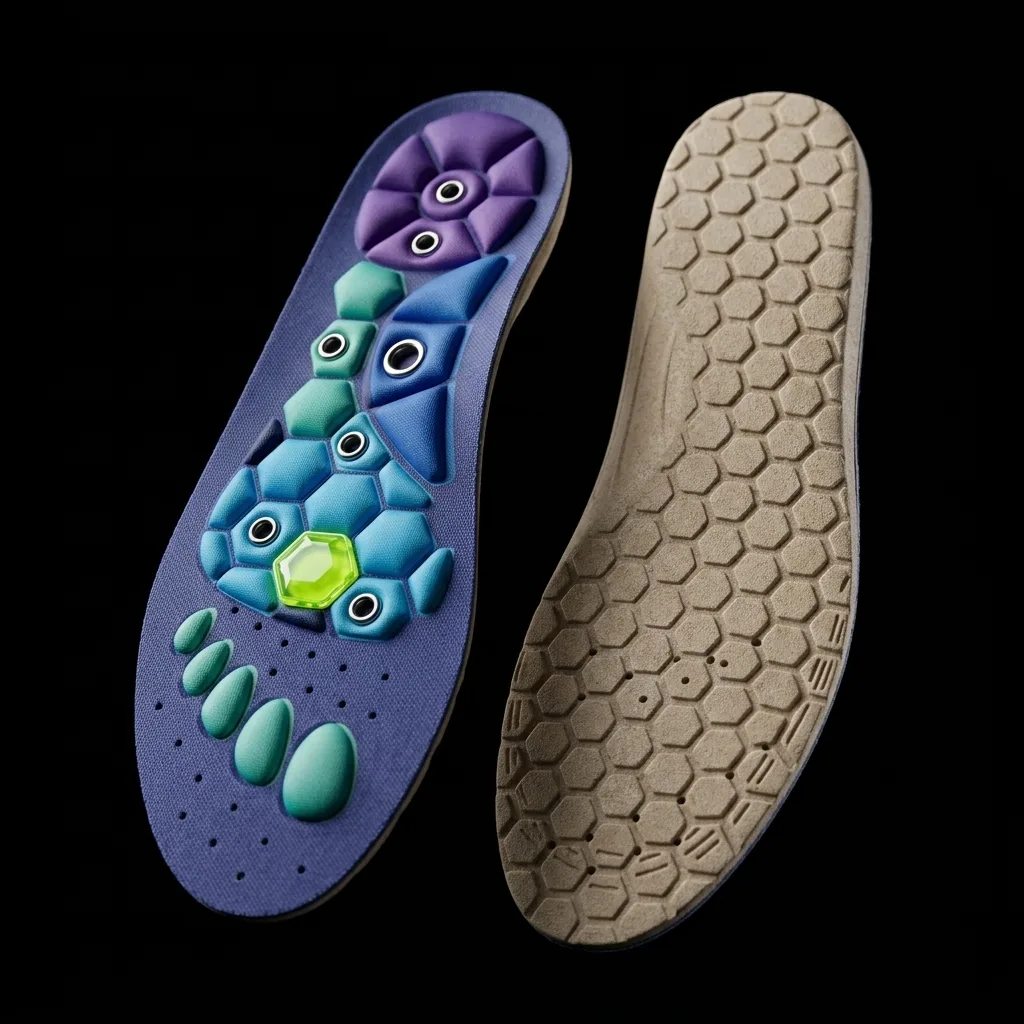
Acupressure Insoles Explained: The Science of Reflexology Underfoot
Written and reviewed for clarity by the AUREZA TOUCH Editorial Team.
What "acupressure" really means
Acupressure is the practice of applying gentle, steady pressure to specific points on the body. On the feet, those points are concentrated — which is why a firm foot rub feels so disproportionately good. Acupressure insoles bring that idea into your shoe: small contoured zones press lightly against the sole as you walk, so every step delivers a subtle massage.
Reflexology, in one paragraph
Reflexology is the related idea that areas of the foot map to the rest of the body. You don't need to believe the full map to feel the benefit: stimulating the sole increases sensation, encourages you to shift weight naturally, and simply feels relaxing. For most people the practical payoff is comfort and reduced tension, not a medical cure.
Why movement matters
A static massage stops when you do. An insole works while you move — thousands of light presses spread across the day. That steady, low-level stimulation is what people describe as feet feeling "lighter" or "less stiff" by evening.
Comfort plus support
Good acupressure insoles don't only massage — they support. A stabilising arch core and a cushioned base handle the mechanical job of spreading load and absorbing shock, while the massage zones add the comfort layer on top. You want both: support without massage feels flat, massage without support feels nice but tires your feet.
Getting used to them
The first day can feel noticeably "present" — that's normal. Most people adapt within a few wears as the foot relaxes into the contours. Start with a few hours, then build up.
The takeaway
Acupressure insoles combine real mechanical support with a gentle, all-day massage. You don't need to study reflexology charts to enjoy the result: feet that feel looked-after instead of beaten up. AUREZA TOUCH builds support, cushioning and acupressure zones into a single trim-to-fit pair.
General information only — not medical advice. AUREZA TOUCH is a comfort product, not a medical device. Seek qualified care for persistent, severe or sudden pain, numbness, swelling or injury.
Published: