Cold Feet and Poor Circulation: What Helps and What Doesn't
Written and reviewed for clarity by the AUREZA TOUCH Editorial Team.
Why feet get cold first
Your feet are the furthest point from your heart, so they're the first to feel it when circulation slows. Sitting still, tight shoes, and long hours in one position all reduce blood flow — and cold, slightly numb feet are the result.
Movement beats everything
The single best thing for cold feet is movement. Calf raises, ankle circles, and simply walking for a few minutes pump blood back toward your feet far better than any gadget. If you sit or stand in one spot for work, build in tiny movement breaks every hour.
What's under your foot matters
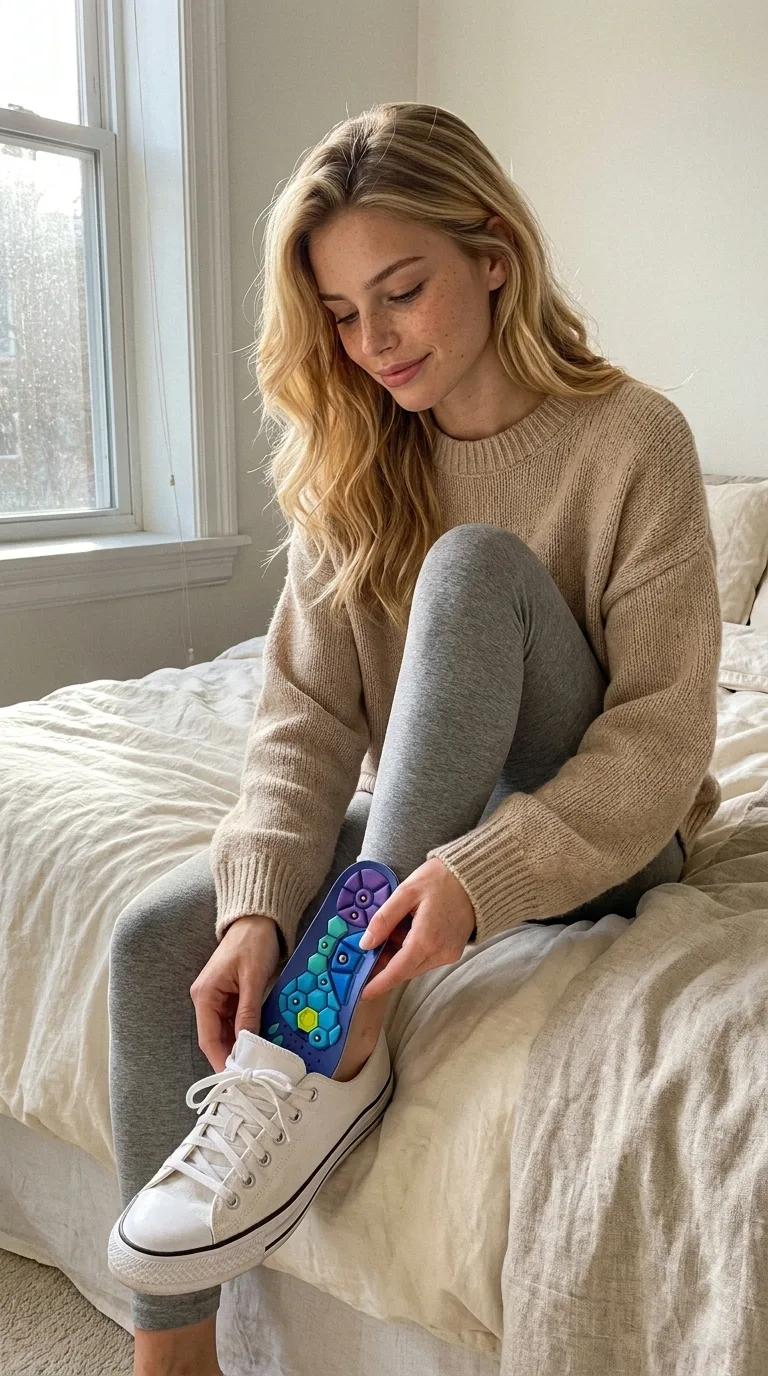
Standing on a cold, hard floor through a thin, flat insole pulls warmth out of your feet and keeps them static. A cushioned, supportive insole lifts your foot off the cold surface and encourages natural micro-movements as you shift your weight — both of which help.
Simple things that work
Warm (not hot) foot soaks, breathable wool-blend socks, and keeping shoes from being too tight all help. Tight shoes are a common hidden cause: they squeeze the very vessels that carry warm blood to your toes.
What to skip
Don't rely on a single quick fix. A heating pad feels nice but does nothing once it's off. The lasting answer is consistent movement plus comfortable, supportive footwear that doesn't restrict blood flow.
When to check with a doctor
Occasional cold feet are normal. Persistent coldness, colour changes, or numbness that won't go away deserve a medical opinion — comfort products help comfort, not underlying conditions.
The takeaway
Keep moving, don't crush your feet in tight shoes, and lift them off cold hard floors with supportive cushioning. AUREZA TOUCH insoles add comfort and gentle stimulation that keep your feet active instead of static.
General information only — not medical advice. AUREZA TOUCH is a comfort product, not a medical device. Seek qualified care for persistent, severe or sudden pain, numbness, swelling or injury.
Published: