Why Your Feet Ache After Standing All Day — And How to Fix It
Written and reviewed for clarity by the AUREZA TOUCH Editorial Team.
Your feet aren't the problem — the floor is
Tile, concrete and laminate are unforgiving. Every step sends a small shock back up through your heel, arch and the ball of your foot. Over an eight-hour shift that adds up to thousands of tiny impacts your body has to absorb. The result is the familiar end-of-day ache: burning soles, sore heels, and that heavy, "I just need to sit down" feeling.
Flat insoles let your feet do all the work
Most shoes ship with a thin, flat foam insole that flattens further within weeks. With no arch support and no cushioning left, your foot muscles work overtime to stabilise every step. Tired muscles are what you actually feel at 4pm — not your shoes "breaking in".
Three things that quietly make it worse
Standing still is harder than walking, because blood pools instead of pumping. Hard, flat shoes remove your natural shock absorption. And worn insoles offer zero support exactly where your arch needs it most. Combine all three and aching feet are almost guaranteed.
What actually helps
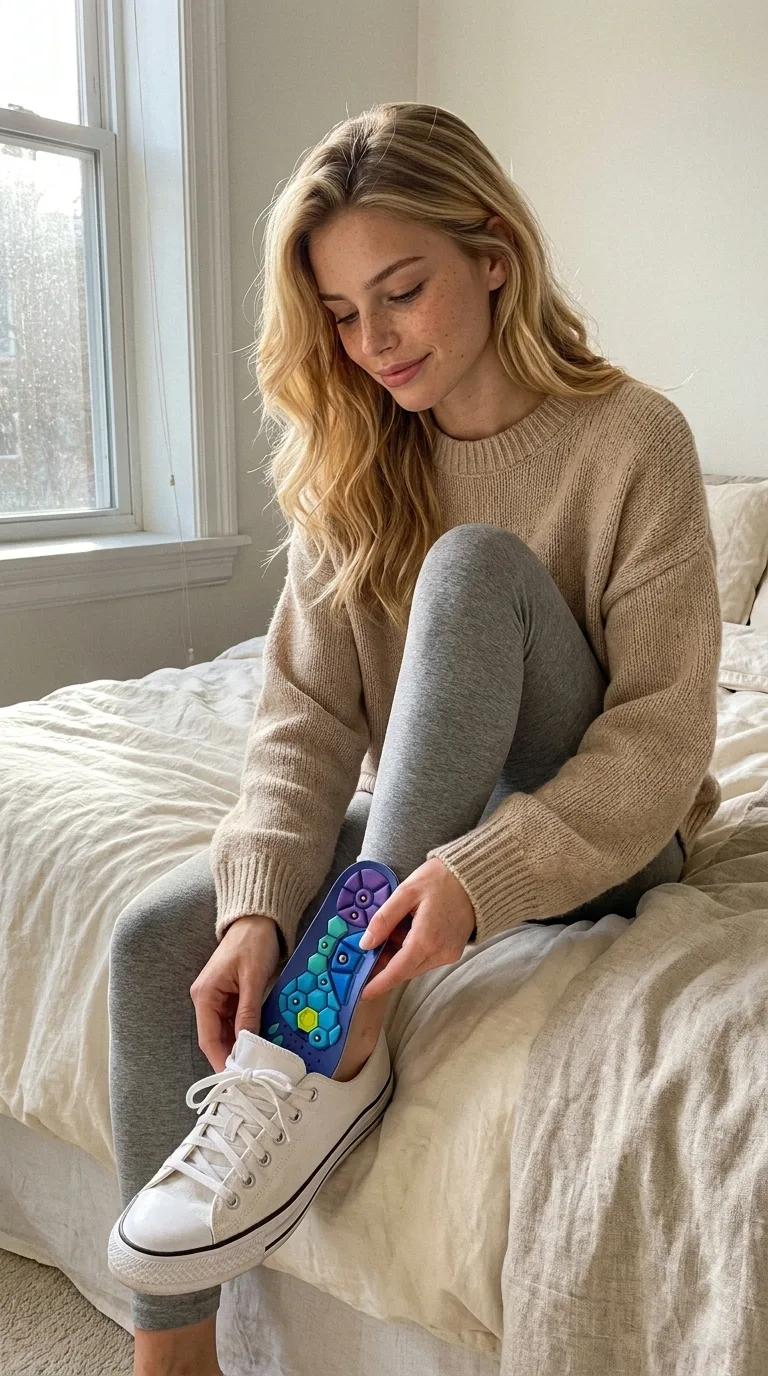
The fastest fix is to put real support and cushioning back under your foot. A contoured insole with a stabilising arch core spreads the load instead of dumping it on your heels, while a cushioned base absorbs the shock the floor sends back. Acupressure massage zones go one step further — gently stimulating pressure points as you move, which many people find leaves their feet feeling lighter at the end of the day.
A simple daily routine
Swap your flat insoles for supportive ones, take your shoes off and flex your feet for two minutes on every break, and roll each foot over a firm ball or mat in the evening to release tension. Small habits, real difference.
The bottom line
Aching feet after standing all day are not something you simply have to accept. Give your feet the support and cushioning the floor takes away, and the afternoon slump becomes a lot more bearable. AUREZA TOUCH insoles were designed for exactly this — trim-to-fit support, cushioning and acupressure zones in one pair.
General information only — not medical advice. AUREZA TOUCH is a comfort product, not a medical device. Seek qualified care for persistent, severe or sudden pain, numbness, swelling or injury.
Published: